
About this book
Reading guide
Themes, characters and key ideas in A Treatise on Tobacco, Tea, Coffee, and Chocolate, written by Chaptra AI.
- about 8 hours
- advanced
- informative
- scholarly
- analytical
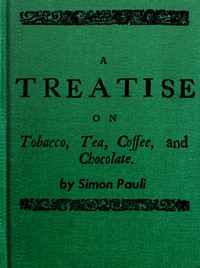
Simon Paulli's "A Treatise on Tobacco, Tea, Coffee, and Chocolate" is a seminal mid-18th century scientific work that meticulously investigates the health implications and benefits of these globally consumed substances. Drawing upon existing medical principles and empirical observations, Paulli provides a comprehensive examination of their origins, properties, and effects on the human constitution. The treatise adopts a scholarly tone, beginning with tobacco and systematically exploring both the perceived medicinal uses and potential dangers of each commodity. It stands as a valuable historical document, reflecting 18th-century medical understanding and the nascent scientific approach to common consumables, emphasizing a balanced understanding of their properties.
“The diligent physician must ever weigh the benefits against the perils of any potent substance.”
Key themes
- Health and Medicine
- This is the central theme, exploring the perceived therapeutic benefits and detrimental effects of tobacco, tea, coffee, and chocolate on human physiology. Paulli meticulously details how these substances interact with the body, often referencing humoral theory and other contemporary medical understandings. The treatise seeks to provide a definitive guide for physicians and the public on the 'correct' and 'incorrect' uses of these commodities for health purposes.
- Observation and Empirical Study
- The treatise embodies the Enlightenment-era shift towards empirical observation and systematic study as cornerstones of scientific knowledge. Paulli, though working within the limitations of his time, strives to move beyond mere anecdote, compiling data, comparing historical accounts, and noting observed effects to formulate his conclusions. This theme underscores the nascent scientific method applied to everyday substances.
- Moderation and Abuse
- A recurring underlying moral and medical message throughout the treatise is the importance of moderation in the consumption of all substances. Paulli frequently contrasts the beneficial effects of judicious use with the deleterious consequences of excess, reflecting a broader 18th-century concern with temperance and self-control. This theme extends beyond purely medical advice to touch upon societal well-being.
Worth discussing
How do Paulli's observations and conclusions about these substances compare with modern scientific understanding? What are the most significant differences and surprising similarities?
Chapter-by-chapter breakdowns, character arcs and the full thematic analysis come with a free account.
Discussions
No one has started one yet
Questions this book opens up
No discussions yet
Be the first to start a discussion about this book!
Sign up to start the discussionReviews
No reviews yet
Be the first to review this book!