
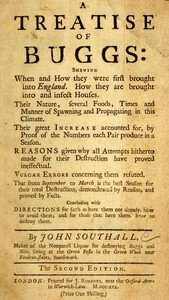
A Treatise of Buggs
Written by John Southall
Chaptra reads alongside you — AI insights, chapter breakdowns and reader discussions for every book. Join free
About this book
Reading guide
Themes, characters and key ideas in A Treatise of Buggs, written by Chaptra AI.
- about 10 hours
- advanced
- informative
- clinical
- historical
John Southall's 'A Treatise of Buggs' (1730) is a pioneering scientific and medical treatise dedicated to the study, eradication, and prevention of bed bugs. It offers a comprehensive, albeit historically dated, examination of these common household pests, detailing their biology, habits, and the various methods for their control prevalent in early 18th-century England. Far from a literary narrative, the book serves as a practical guide and scientific record, reflecting the prevailing understanding of entomology and public health during its time. It stands as a significant historical document illustrating early scientific methodology and societal struggles with hygiene.
“"That the Buggs are a Species of the Flea, as some have imagin'd, is a Mistake..."”
Key themes
- Public Health and Hygiene
- The treatise directly addresses a significant public health crisis of its time: widespread bed bug infestations. It highlights the impact of these pests on comfort, health, and quality of life, emphasizing the importance of cleanliness and diligent eradication efforts to maintain a healthy living environment. This theme underscores the societal struggle with sanitation and disease prevention in the pre-modern era.
- Early Scientific Observation and Empiricism
- Southall's work is a testament to the scientific spirit of the Enlightenment, relying on direct observation and systematic experimentation rather than superstition. He meticulously describes the biology and behavior of bed bugs, attempting to understand their nature before proposing solutions. This theme showcases the burgeoning scientific method and the shift towards evidence-based reasoning in the 18th century.
- Human-Nature Conflict and Control
- The treatise explores the ongoing struggle between humanity and the natural world, specifically focusing on the efforts to control and eradicate a problematic species that invades human habitats. It highlights the human desire to assert dominance over elements of nature deemed harmful or undesirable, reflecting a broader theme of environmental management and the constant battle against pests and disease.
Worth discussing
How does Southall's treatise reflect the state of scientific inquiry and understanding in the early 18th century?
Chapter-by-chapter breakdowns, character arcs and the full thematic analysis come with a free account.
Discussions
No one has started one yet
Questions this book opens up
No discussions yet
Be the first to start a discussion about this book!
Sign up to start the discussionReviews
No reviews yet
Be the first to review this book!