
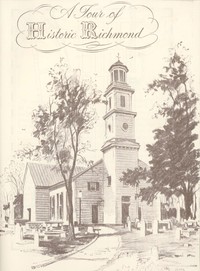
A Tour of Historic Richmond
Written by Frances Leigh Williams
Chaptra reads alongside you — AI insights, chapter breakdowns and reader discussions for every book. Join free
About this book
Read it with a club
Small groups reading the same books and talking as they go.


News
- 1 member
- 1,813 discussions
- Active 2d ago
Read A Tour of Historic Richmond alongside people who are reading it too.
Also here: News Bulletin, Just Joking....
Chaptra Prime — paid clubs, every club feature, and unlimited reading support, for $5 a month or $60 once.
See PrimeReading guide
Themes, characters and key ideas in A Tour of Historic Richmond, written by Chaptra AI.
- about 10 hours
- intermediate
- informative
- historical
- reverent
Frances Leigh Williams's "A Tour of Historic Richmond" is a comprehensive historical guide from the early to mid-20th century, meticulously detailing the rich heritage of Richmond, Virginia. The book conducts a geographical and chronological exploration of the city, highlighting pivotal landmarks, events, and influential figures that shaped Richmond and, by extension, American history. From its founding in 1737 by William Byrd II to its crucial role as the Confederate capital during the Civil War, Williams chronicles the city's evolution through sites like St. John's Church and Hollywood Cemetery. It serves as both an informative historical account and a practical guide, illustrating how Richmond's storied past continues to resonate in its modern identity.
“Richmond's very stones breathe history, each cobblestone a testament to centuries of American drama.”
Key themes
- Historical Preservation and Memory
- This theme is central to the book, which functions as a guide to preserving and remembering Richmond's past. Williams emphasizes the importance of landmarks, monuments, and historical sites in maintaining a tangible connection to history and ensuring that past events and figures are not forgotten. The book itself is an act of preservation.
- City Identity and Legacy
- The book explores how Richmond's identity is inextricably linked to its historical legacy. From its founding as a colonial trading post to its role as the Confederate capital, Williams illustrates how past events and influential figures have shaped the city's character, resilience, and unique place within American history. Richmond's identity is presented as a complex tapestry woven from its triumphs and its struggles.
- Conflict, Resilience, and Sacrifice
- Williams extensively covers Richmond's experience through various conflicts, most notably the American Civil War. The theme explores the human cost of war, the strategic importance of Richmond, and the city's remarkable ability to rebuild and endure following immense destruction. It delves into the sacrifices made by soldiers and citizens.
Worth discussing
How does Williams's portrayal of Richmond's history reflect the prevailing historical narratives and biases of the early to mid-20th century, particularly concerning the Civil War?
Chapter-by-chapter breakdowns, character arcs and the full thematic analysis come with a free account.
Discussions
No one has started one yet
Questions this book opens up
No discussions yet
Be the first to start a discussion about this book!
Sign up to start the discussionReviews
No reviews yet
Be the first to review this book!