
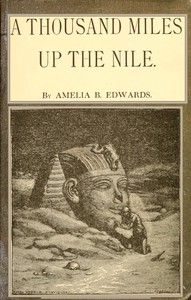
A thousand miles up the Nile
Written by Amelia B. Edwards
Chaptra reads alongside you — AI insights, chapter breakdowns and reader discussions for every book. Join free
About this book
Read it with a club
Small groups reading the same books and talking as they go.


News
- 4 members
- 1,813 discussions
- Active Sep 11
Read A thousand miles up the Nile alongside people who are reading it too.
Also here: News Bulletin, Just Joking....
Chaptra Prime — paid clubs, every club feature, and unlimited reading support, for $5 a month or $60 once.
See PrimeReading guide
Themes, characters and key ideas in A thousand miles up the Nile, written by Chaptra AI.
- about 8 hours
- intermediate
- Adventurous
- Historical
- Enlightening
Amelia B. Edwards's "A Thousand Miles Up the Nile" is a seminal 19th-century travelogue chronicling her extensive journey through ancient Egypt aboard a dahabiyeh. The narrative meticulously details her observations of the Nile's landscapes, the vibrant local cultures, and, most significantly, the awe-inspiring historical sites from Cairo to Abu Simbel. Blending vivid personal anecdotes with profound historical and archaeological insights, Edwards captures the essence of a land steeped in antiquity while reflecting on the challenges of early tourism and the urgent need for monument preservation. The book stands as both a grand adventure and a crucial document in the history of Egyptology, offering readers a richly detailed window into a bygone era of exploration and discovery.
“To describe a Nile journey is like describing the sea, or a sunset, or a mountain. No two ever see it alike, and no two days are alike for those who see it.”
Key themes
- Exploration and Adventure
- The core theme of the book, detailing the physical journey up the Nile and the intellectual adventure of discovering ancient wonders. It captures the spirit of 19th-century exploration, emphasizing curiosity, endurance, and the thrill of encountering the unknown.
- The Lure of Ancient Egypt
- This theme explores the profound fascination with the history, art, and architecture of ancient Egypt. Edwards conveys the awe and reverence inspired by the monumental ruins, delving into their historical context and artistic merit, and highlighting the timeless appeal of a lost civilization.
- Preservation of Antiquities
- A critical theme addressing Edwards's growing concern over the neglect, vandalism, and destruction of ancient Egyptian sites. The book becomes a powerful call to action for systematic archaeological study and conservation, highlighting the fragility of historical heritage.
Worth discussing
How does Edwards balance her personal travel experiences with archaeological and historical observations? What effect does this blend have on the reader?
Chapter-by-chapter breakdowns, character arcs and the full thematic analysis come with a free account.
Discussions
No one has started one yet
Questions this book opens up
No discussions yet
Be the first to start a discussion about this book!
Sign up to start the discussionReviews
No reviews yet
Be the first to review this book!