
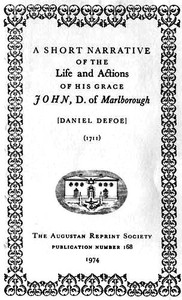
A Short Narrative of the Life and Actions of His Grace John, D. of Marlborogh
Written by Daniel Defoe
Chaptra reads alongside you — AI insights, chapter breakdowns and reader discussions for every book. Join free
About this book
Reading guide
Themes, characters and key ideas in A Short Narrative of the Life and Actions of His Grace John, D. of Marlborogh, written by Chaptra AI.
- about 8 hours
- intermediate
- Historical
- Defensive
- Analytical
Daniel Defoe's "A Short Narrative of the Life and Actions of His Grace John, D. of Marlborough" is an early 18th-century historical account and polemic defending John Churchill, the Duke of Marlborough, against his political detractors. Presented through the voice of a purportedly old army officer, the narrative meticulously details Marlborough's military career, highlighting his strategic genius and leadership in significant campaigns across Flanders and Ireland. The work systematically refutes accusations of greed and treachery, aiming to restore Marlborough's public image amidst a period of intense political rivalry and hostile pamphleteering. It serves as a testament to Defoe's skill in crafting persuasive historical narratives designed to shape public opinion.
“It is a lamentable truth that the greatest merits are often attended by the most virulent calumnies, and noble actions obscured by the mists of envy.”
Key themes
- The Nature of Reputation and Slander
- Central to the book's purpose, this theme explores how public figures' reputations are shaped by political discourse, propaganda, and personal attacks. Defoe meticulously defends Marlborough against specific accusations, highlighting the destructive power of slander and the difficulty of distinguishing truth from politically motivated falsehoods in public perception.
- Military Leadership and Strategy
- The book extensively details Marlborough's strategic genius and leadership qualities. It celebrates his tactical abilities, courage, and decision-making on the battlefield, presenting him as an exemplary military commander whose contributions were vital to England's success during a critical period. This theme emphasizes the practical application of leadership in warfare.
- Political Propaganda and Persuasion
- Defoe's work itself is a prime example of political propaganda. This theme examines how narratives are constructed to persuade public opinion, defend political figures, and influence policy. It showcases Defoe's skill in using a seemingly objective historical account to serve a clear political agenda, highlighting the power of rhetoric in public life.
Worth discussing
How does Defoe use the 'old army officer' narrator to enhance the credibility and persuasiveness of his defense of Marlborough?
Chapter-by-chapter breakdowns, character arcs and the full thematic analysis come with a free account.
Discussions
No one has started one yet
Questions this book opens up
No discussions yet
Be the first to start a discussion about this book!
Sign up to start the discussionReviews
No reviews yet
Be the first to review this book!