
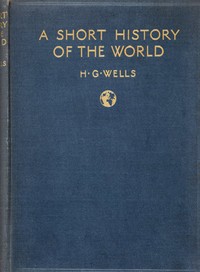
A Short History of the World
Written by H. G. (Herbert George) Wells
Chaptra reads alongside you — AI insights, chapter breakdowns and reader discussions for every book. Join free
About this book
Reading guide
Themes, characters and key ideas in A Short History of the World, written by Chaptra AI.
- about 10 hours
- intermediate
- informative
- sweeping
- didactic
H. G. Wells' "A Short History of the World" is a groundbreaking historical account from the early 20th century, offering a sweeping narrative from the Earth's cosmic origins to the events preceding World War I. Breaking from conventional nationalistic histories, Wells presents a unified, global perspective, tracing the evolution of life, the rise and fall of civilizations, and humanity's continuous journey of development. He emphasizes the interconnectedness of historical events, the power of scientific understanding, and the slow, often turbulent, march towards a potentially unified global future. The book serves as an accessible yet ambitious overview, aiming to provide readers with a comprehensive understanding of humanity's place in the vast expanse of time.
“The history of life is a history of the modification of living things.”
Key themes
- Human Progress and Evolution
- Wells posits a continuous, albeit often turbulent, trajectory of human progress, driven by intellectual curiosity, technological innovation, and evolving social organization. He traces evolution from biological development to the advancement of human civilization, highlighting key turning points like the agricultural revolution, the development of writing, and major scientific discoveries. This theme underpins the entire narrative, suggesting humanity's inherent capacity for improvement and adaptation through learning and ingenuity.
- The Unity and Interconnectedness of Mankind
- Despite geographical separation and cultural differences, Wells emphasizes a common human heritage and an underlying unity. He frequently points out how innovations, ideas, and even conflicts in one part of the world eventually ripple out to affect others, advocating for a global perspective that transcends nationalistic boundaries. This theme is particularly poignant given the book's publication shortly after World War I, promoting a vision of shared humanity and collective destiny.
- The Role of Science and Rational Thought
- Wells, a prominent science fiction writer and intellectual, champions the scientific method and rational inquiry as the most reliable means of understanding the world and driving human progress. He contrasts scientific understanding with ancient superstitions, religious dogma, and uncritical acceptance of tradition, arguing that intellectual freedom, empirical observation, and education are crucial for societal advancement and for overcoming historical patterns of ignorance and conflict. The book itself is an exercise in applying scientific and rational thinking to historical analysis.
Worth discussing
How does Wells' 'Short History' challenge or reinforce your previous understanding of world history, particularly regarding global interconnectedness?
Chapter-by-chapter breakdowns, character arcs and the full thematic analysis come with a free account.
Discussions
No one has started one yet
Questions this book opens up
No discussions yet
Be the first to start a discussion about this book!
Sign up to start the discussionReviews
No reviews yet
Be the first to review this book!