
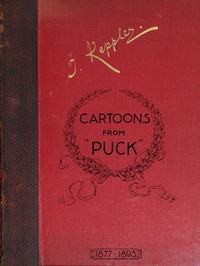
A Selection of Cartoons from Puck
Written by Joseph Ferdinand Keppler
Chaptra reads alongside you — AI insights, chapter breakdowns and reader discussions for every book. Join free
About this book
Reading guide
Themes, characters and key ideas in A Selection of Cartoons from Puck, written by Chaptra AI.
- about 8 hours
- intermediate
- Satirical
- Historical
- Critical
Joseph Ferdinand Keppler's "A Selection of Cartoons from Puck" is a vital collection showcasing the influential political satire of the late 19th century. The book compiles Keppler's pivotal cartoons from *Puck* magazine, demonstrating his unique blend of German artistic heritage and American satirical insight. Through allegorical and direct depictions, Keppler critically engaged with the pressing social and political issues of his era, shaping the landscape of American cartooning. An introductory essay by H. C. Bunner provides crucial context on Keppler's background and his distinctive approach to political critique, setting the stage for the visual commentary that follows. This collection serves as a historical window into the political climate and societal concerns of the time, filtered through the sharp wit and artistic prowess of a master cartoonist.
“"Keppler's approach combined both art forms to critique political figures and societal events."”
Key themes
- Political Corruption and Accountability
- A central theme across Keppler's cartoons is the pervasive critique of political corruption, patronage, and the abuse of power. His work often exposed the moral failings of politicians, the influence of special interests, and the lack of accountability within government. He used visual metaphors to highlight the hypocrisy and self-serving nature of political figures and institutions.
- The Power and Pitfalls of Party Politics
- Keppler frequently engaged with the dynamics between the Democratic and Republican parties, often satirizing their rivalries, inconsistencies, and shared flaws. He highlighted how party loyalty could overshadow public interest, and how political rhetoric often masked less noble intentions. His work often deconstructed the allegiances and conflicts that defined the two-party system.
- Social Commentary and Industrialization's Impact
- Beyond direct political figures, Keppler's cartoons also provided sharp social commentary on the broader societal issues of the late 19th century, including the rapid industrialization, urbanization, immigration, and the growing divide between wealth and poverty. He often depicted the struggles of the working class, the excesses of the wealthy, and the challenges of social change.
Worth discussing
How does Keppler's blend of caricature and allegory contribute to the effectiveness of his political critique?
Chapter-by-chapter breakdowns, character arcs and the full thematic analysis come with a free account.
Discussions
No one has started one yet
Questions this book opens up
No discussions yet
Be the first to start a discussion about this book!
Sign up to start the discussionReviews
No reviews yet
Be the first to review this book!