
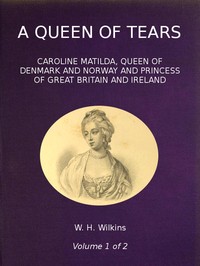
A Queen of Tears, vol. 1 of 2: Caroline Matilda, Queen of Denmark and Norway and Princess of Great Britain and Ireland
Written by W. H. (William Henry) Wilkins
Chaptra reads alongside you — AI insights, chapter breakdowns and reader discussions for every book. Join free
About this book
Reading guide
Themes, characters and key ideas in A Queen of Tears, vol. 1 of 2: Caroline Matilda, Queen of Denmark and Norway and Princess of Great Britain and Ireland, written by Chaptra AI.
- about 8 hours
- intermediate
- Tragic
- Historical
- Melancholy
W. H. Wilkins' "A Queen of Tears, vol. 1 of 2" offers a sympathetic early 20th-century biographical account of Caroline Matilda, the tragically fated Queen of Denmark and Norway and sister to King George III. This first volume meticulously details her birth into the British royal family, her early upbringing, and the circumstances that led to her arranged marriage with the mentally unstable Christian VII of Denmark. Wilkins aims to resurrect the forgotten story of a queen whose life was marked by political intrigue, personal isolation, and the inherent powerlessness of royal women, ultimately setting the stage for the dramatic events that earned her the poignant title "Queen of Tears."
“"Her life, born under the shadow of a father's untimely death, was destined to be a tapestry woven with threads of sorrow and a crown perpetually heavy with tears."”
Key themes
- Royal Tragedy and Destiny
- The theme explores how individuals born into royalty, particularly women, are often subjected to a predetermined, often tragic, destiny dictated by political necessity rather than personal choice. Caroline Matilda's life, from her father's death to her arranged marriage and subsequent unhappiness, serves as a poignant example of this. The 'Queen of Tears' title itself encapsulates this inherent tragedy.
- The Powerlessness of Women in Royal Marriages
- This theme highlights the severe limitations and lack of agency experienced by royal women in 18th-century Europe. Their primary role was to secure alliances and produce heirs, often at the expense of their personal happiness, safety, or mental well-being. Caroline Matilda's marriage to an unstable king, and her subsequent inability to escape her situation, perfectly illustrates this societal constraint.
- Political Intrigue and Court Machinations
- The Danish court is depicted as a hotbed of ambition, betrayal, and shifting loyalties, where power is constantly contested beneath a veneer of decorum. The theme explores how courtiers and ministers vie for influence, often exploiting the weaknesses of the monarch or the vulnerability of the queen. This environment ultimately sets the stage for Caroline Matilda's downfall.
Worth discussing
How does Wilkins' early 20th-century perspective influence his portrayal of Caroline Matilda, and how might a contemporary historian approach her story differently?
Chapter-by-chapter breakdowns, character arcs and the full thematic analysis come with a free account.
Discussions
No one has started one yet
Questions this book opens up
No discussions yet
Be the first to start a discussion about this book!
Sign up to start the discussionReviews
No reviews yet
Be the first to review this book!