
The AI reading companion for people who take books seriously
AI insights, chapter breakdowns, community discussions — all in one place.
A new discovery for finding the longitude
About this book
More by William Hobbs
Browse all books by this authorExplore Longitude Books
Discover more Longitude literature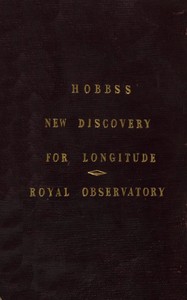
Click "Read now" to open in our Reader with AI features.
Community Discussions
Join the conversation about this book
Discussions
0 discussions
No discussions yet
Be the first to start a discussion about this book!
Sign up to start the discussionAI-Powered Insights
A clearer way to understand A new discovery for finding the longitude through themes, characters, and key ideas
This reading guide highlights what stands out in A new discovery for finding the longitude through 4 core themes, 2 character profiles, and 5 chapter-level ideas. It is meant to help readers decide whether the book fits their taste and deepen the reading once they begin.
About this book
A quick AI guide to “A new discovery for finding the longitude”
Get the shape of the book before you commit: what it is about, what mood it carries, and what ideas readers tend to stay with afterward.
What the book is doing
William Hobbs's "A New Discovery for Finding the Longitude" is an early 18th-century scientific treatise proposing an innovative solution to the critical navigational problem of determining longitude at sea. The book introduces a novel spring movement mechanism designed for precise timekeeping, which Hobbs posits is essential for accurate longitudinal calculations. It meticulously outlines the operational principles of this device, detailing the procedures for its setup, recording of indexes, and subsequent calculations based on celestial observations, particularly the sun's position. Hobbs asserts that his method offers reliable results across various environmental conditions, provided specific instructions are adhered to, aiming to equip navigators with a practical and effective tool for maritime positioning.
Key Themes
Scientific Innovation and Problem Solving
The central theme revolves around the human endeavor to overcome significant scientific and practical challenges through ingenuity and systematic thought. Hobbs's entire work is a testament to the focused effort required to solve the longitude problem, which was considered one of the most difficult scientific puzzles of its era.
Precision and Accuracy
Hobbs consistently emphasizes the need for meticulousness in observation, timekeeping, and calculation. The success of his method hinges entirely on the device's accuracy and the navigator's diligent adherence to precise procedures. This theme highlights the scientific ideal of exactitude.
“A new discovery for finding the longitude.”
How does Hobbs's proposed solution compare to other contemporary attempts to solve the longitude problem, particularly the chronometer developed by John Harrison?
See chapter-by-chapter takeaways, deeper character arcs, and a fuller literary analysis built around this book.
Unlock full AI analysis for “A new discovery for finding the longitude”
Chapter breakdowns, character deep-dives, and thematic analysis — all in one place.
Reader Reviews
See what others are saying
Reviews
Overall Rating
Based on community ratings
No reviews yet
Be the first to review this book!
Readers Also Enjoyed
Discover more books similar to A new discovery for finding the longitude