
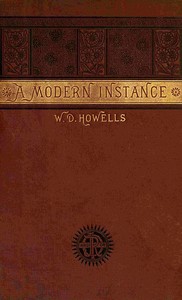
A Modern Instance
Written by William Dean Howells
Chaptra reads alongside you — AI insights, chapter breakdowns and reader discussions for every book. Join free
About this book
Reading guide
Themes, characters and key ideas in A Modern Instance, written by Chaptra AI.
- about 10 hours
- advanced
- realistic
- tragic
- psychological
William Dean Howells's "A Modern Instance" is a seminal work of American literary realism, chronicling the tumultuous marriage of Bartley Hubbard, an ambitious but morally vacuous journalist, and Marcia Gaylord, his passionate yet possessive wife. Set against the backdrop of late 19th-century New England, the novel meticulously dissects the decay of their relationship, moving from youthful infatuation in a quaint village to the harsh realities of urban life and marital discord in Boston. Howells explores profound social and psychological themes, including the complexities of love, the corrosive effects of unchecked ambition, and the restrictive societal expectations placed upon women. Ultimately, the book offers a stark, unromanticized portrayal of a marriage's unraveling, reflecting a critical examination of American character and modern life.
“"The trouble with Bartley was not that he was bad, but that he was not good."”
Key themes
- The Nature of Marriage and Love
- Howells meticulously dissects the institution of marriage, moving beyond romantic ideals to expose its complexities, challenges, and potential for disillusionment. The novel portrays love as a powerful, sometimes destructive, force, and marriage as a fragile bond constantly tested by individual character flaws, societal pressures, and unmet expectations.
- Ambition and Morality
- This theme explores the corrupting influence of unchecked ambition, particularly as seen in Bartley Hubbard. Howells examines how the pursuit of success, when untethered from ethical principles and personal integrity, can lead to moral decay, professional failure, and personal ruin.
- Realism vs. Romanticism
- As a seminal work of American realism, the novel itself is a thematic statement. Howells consciously rejects the romanticized portrayals of love, marriage, and heroism prevalent in earlier literature, choosing instead to depict life "as it is"—with all its moral ambiguities, psychological complexities, and often tragic outcomes. This theme is evident in the unheroic nature of Bartley and the unresolved suffering of Marcia.
Worth discussing
To what extent are Bartley and Marcia individually responsible for the failure of their marriage? Could it have been saved?
Chapter-by-chapter breakdowns, character arcs and the full thematic analysis come with a free account.
Discussions
No one has started one yet
Questions this book opens up
No discussions yet
Be the first to start a discussion about this book!
Sign up to start the discussionReviews
No reviews yet
Be the first to review this book!