
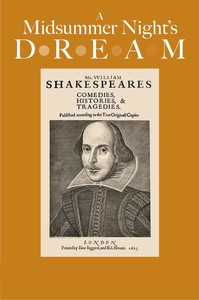
A Midsummer Night's Dream
Written by William Shakespeare
Chaptra reads alongside you — AI insights, chapter breakdowns and reader discussions for every book. Join free
About this book
Reading guide
Themes, characters and key ideas in A Midsummer Night's Dream, written by Chaptra AI.
- about 8 hours
- advanced
- humorous
- romantic
- magical
William Shakespeare's "A Midsummer Night's Dream" is a delightful comedic play that masterfully intertwines four distinct worlds: the noble court of Athens, the four young Athenian lovers, a bumbling troupe of amateur actors (the Mechanicals), and the magical, often mischievous, realm of fairies. Set against the backdrop of Theseus and Hippolyta's impending wedding, the play explores the chaotic and often irrational nature of love when Hermia defies her father's choice of husband, fleeing into an enchanted forest with Lysander. Their escape, complicated by the pursuit of Demetrius and Helena, becomes a playground for the fairy king Oberon and his impish servant Puck, whose magical interventions lead to hilarious misunderstandings and transformations. Ultimately, order is restored, and all threads converge in a celebration of love, illusion, and the power of imagination.
“The course of true love never did run smooth.”
Key themes
- The Fickle and Irrational Nature of Love
- This theme is central to the play, particularly through the chaotic experiences of the four Athenian lovers. Shakespeare demonstrates how easily love can shift, be misdirected, and defy logic. The magic potions literally embody this irrationality, making characters fall in and out of love almost instantaneously, highlighting that love often operates outside of reason, driven by fleeting desire or external influence rather than deep understanding.
- Magic, Illusion, and Dreams
- The play constantly blurs the lines between what is real and what is imagined, magical, or dreamt. The forest acts as a liminal space where the rules of Athens (and reality) are suspended, allowing the supernatural to directly influence human affairs. The characters themselves frequently question if their experiences were real or merely a dream, culminating in Puck's epilogue, which invites the audience to consider the entire play as a dream. This theme explores the power of imagination and the subjective nature of perception.
- Order vs. Disorder
- The play establishes a clear contrast between the rigid, patriarchal order of Athens, governed by law (represented by Theseus and Egeus), and the chaotic, wild disorder of the enchanted forest, ruled by the capricious fairies. The disruption of the Athenian lovers' lives by the fairies' magic highlights how easily order can dissolve into confusion. However, the play ultimately suggests a harmonious resolution where chaos gives way to a new, perhaps more flexible, order, culminating in the triple wedding and the blessing of the house by the fairies.
Worth discussing
How does Shakespeare use the setting of the Athenian forest to contrast with the rigid laws of Athens, both literally and symbolically?
Chapter-by-chapter breakdowns, character arcs and the full thematic analysis come with a free account.
Discussions
No one has started one yet
Questions this book opens up
No discussions yet
Be the first to start a discussion about this book!
Sign up to start the discussionReviews
No reviews yet
Be the first to review this book!