
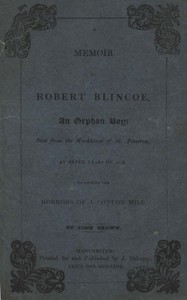
A Memoir of Robert Blincoe, an Orphan Boy: Sent from the workhouse of St. Pancras, London, at seven years of age, to endure the horrors of a cotton-mill, through his infancy and youth, with a minute detail of his sufferings, being the first memoir of the kind published.
Written by John Brown
Chaptra reads alongside you — AI insights, chapter breakdowns and reader discussions for every book. Join free
About this book
Reading guide
Themes, characters and key ideas in A Memoir of Robert Blincoe, an Orphan Boy: Sent from the workhouse of St. Pancras, London, at seven years of age, to endure the horrors of a cotton-mill, through his infancy and youth, with a minute detail of his sufferings, being the first memoir of the kind published., written by Chaptra AI.
- about 8 hours
- advanced
- dark
- somber
- harrowing
John Brown's "A Memoir of Robert Blincoe, an Orphan Boy" serves as a pioneering exposé of the brutal realities of child labor during the British Industrial Revolution. The narrative chronicles the harrowing life of Robert Blincoe, an orphan dispatched from a London workhouse at age seven to endure unimaginable suffering in cotton mills. Through Blincoe's detailed account of relentless labor, starvation, and severe physical abuse, the memoir lays bare the systemic exploitation of vulnerable children and the moral failings of a society driven by industrial expansion. It stands as a powerful testament to human resilience amidst extreme cruelty and a foundational document in the history of social reform literature. The book's stark portrayal aimed to awaken public consciousness to the dire need for protective legislation for factory workers.
“From the age of seven, my childhood was a tapestry woven with the threads of hunger, fear, and the ceaseless drone of the mill.”
Key themes
- Child Exploitation and Industrial Brutality
- This is the core theme, meticulously detailing the systemic abuse, long hours, dangerous conditions, and physical violence inflicted upon children in the cotton mills. The memoir serves as a stark indictment of the industrial system's prioritization of profit over human welfare, particularly that of the most vulnerable.
- Loss of Innocence
- The memoir vividly portrays the rapid and brutal stripping away of Blincoe's childhood and innocence. From yearning for connection in the workhouse to facing daily horrors in the mill, his journey is a testament to how extreme adversity can irrevocably alter a child's perception of the world and their place within it.
- Social Injustice and Poverty
- The memoir underscores the profound social inequalities of 19th-century Britain, where orphaned and impoverished children were particularly vulnerable to exploitation. It critiques a societal structure that allowed such suffering to persist, highlighting the failures of charity, government, and the industrial class to protect the most marginalized.
Worth discussing
How does the memoir challenge the prevailing societal views of childhood and labor during the Industrial Revolution?
Chapter-by-chapter breakdowns, character arcs and the full thematic analysis come with a free account.
Discussions
No one has started one yet
Questions this book opens up
No discussions yet
Be the first to start a discussion about this book!
Sign up to start the discussionReviews
No reviews yet
Be the first to review this book!