
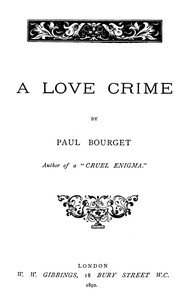
A Love Crime
Written by Paul Bourget
Chaptra reads alongside you — AI insights, chapter breakdowns and reader discussions for every book. Join free
About this book
Reading guide
Themes, characters and key ideas in A Love Crime, written by Chaptra AI.
- about 8 hours
- intermediate
- melancholy
- introspective
- romantic
Paul Bourget's "A Love Crime" is a late 19th-century psychological novel that meticulously dissects the emotional turmoil of Helen Chazel, a Parisian wife and mother, as she grapples with an illicit passion. Torn between her societal obligations to her husband, Alfred, and an intense, forbidden love for Armand de Querne, Helen navigates a treacherous landscape of desire, guilt, and the profound consequences of her choices. The narrative delves into the inner conflicts that define her struggle, exploring themes of fidelity, betrayal, and the complex interplay between individual desire and societal expectations. It ultimately portrays the tragic unfolding of a 'love crime,' scrutinizing the emotional and moral fallout for all involved.
“"Her heart was a battlefield where duty and desire waged a relentless, silent war."”
Key themes
- Love vs. Duty/Fidelity
- This is the central conflict of the novel, explored through Helen's agonizing choice between her fervent love for Armand and her marital and maternal duties to Alfred and her children. Bourget dissects the internal struggle between personal desire and societal/moral obligation, questioning the nature of true commitment.
- Psychological Conflict and Inner Turmoil
- The novel is a masterclass in psychological realism, focusing intensely on Helen's internal landscape. Bourget meticulously details her thoughts, feelings, anxieties, and the constant battle between her conscience and her desires. The true 'crime' is often committed within her mind long before it manifests externally.
- Betrayal and its Consequences
- The novel meticulously traces the profound impact of betrayal, not only on the betrayed (Alfred) but also on the betrayer (Helen) and the instigator (Armand). It explores the far-reaching emotional, social, and psychological repercussions of infidelity, revealing how a 'love crime' can unravel lives.
Worth discussing
How does Bourget use Helen's 'neuralgia' as a metaphor for her emotional and psychological state?
Chapter-by-chapter breakdowns, character arcs and the full thematic analysis come with a free account.
Discussions
No one has started one yet
Questions this book opens up
No discussions yet
Be the first to start a discussion about this book!
Sign up to start the discussionReviews
No reviews yet
Be the first to review this book!