
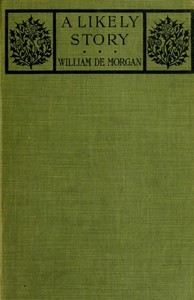
A Likely Story
Written by William De Morgan
Chaptra reads alongside you — AI insights, chapter breakdowns and reader discussions for every book. Join free
About this book
Reading guide
Themes, characters and key ideas in A Likely Story, written by Chaptra AI.
- about 10 hours
- intermediate
- humorous
- poignant
- domestic
William De Morgan's "A Likely Story" delves into the intricate and often humorous complexities of early 20th-century domestic life through the lens of Reginald and Euphemia Aiken's perpetually bickering marriage. Set against the backdrop of their Chelsea studio on a cold, foggy day, the novel quickly establishes the couple's dynamic of witty, yet underlying, discontent. A seemingly minor incident involving their maid, Sairah, and a valuable painting Reginald is restoring, escalates into a series of miscommunications and misunderstandings that expose deeper marital fissures and class tensions. What begins as a domestic squabble transforms into a poignant exploration of love, resentment, and the fragility of relationships, revealing the profound impact of unspoken words and misinterpreted actions.
“"It's a curious thing about marriage, isn't it, Reginald, how one can spend a lifetime with someone and still speak entirely different languages?"”
Key themes
- Marital Discord and Communication
- This theme explores the intricacies and difficulties of long-term marital relationships, particularly how constant bickering, unspoken resentments, and a lack of genuine communication can erode intimacy and understanding. De Morgan delves into the psychological underpinnings of why couples, despite affection, fall into patterns of misunderstanding.
- Truth vs. Misunderstanding
- At the core of the narrative is the exploration of how easily truth can be obscured by differing perspectives, assumptions, and a failure to communicate clearly. The novel demonstrates that 'truth' is often subjective and constructed through individual interpretation, leading to a cascade of misunderstandings that drive the plot.
- Class Dynamics and Social Expectations
- The novel subtly examines the hierarchical structure of early 20th-century society, particularly the relationship between employers and domestic staff. It highlights the vulnerability of the working class (Sairah) and how their actions and perspectives are often misunderstood or dismissed by their employers, who operate under different sets of assumptions and privileges.
Worth discussing
How does De Morgan use humor to address the more serious themes of marital discontent and miscommunication?
Chapter-by-chapter breakdowns, character arcs and the full thematic analysis come with a free account.
Discussions
No one has started one yet
Questions this book opens up
No discussions yet
Be the first to start a discussion about this book!
Sign up to start the discussionReviews
No reviews yet
Be the first to review this book!