
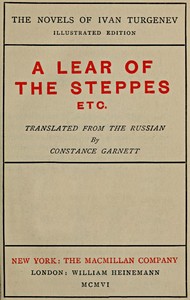
A Lear of the Steppes, etc.
Written by Ivan Sergeevich Turgenev
Chaptra reads alongside you — AI insights, chapter breakdowns and reader discussions for every book. Join free
About this book
Reading guide
Themes, characters and key ideas in A Lear of the Steppes, etc., written by Chaptra AI.
- about 6 hours
- intermediate
- tragic
- melancholic
- reflective
Ivan Turgenev's "A Lear of the Steppes, etc." is a poignant novella exploring the tragic downfall of Martin Petrovitch Harlov, a powerful and imposing landowner, through the lens of a framed narrative. Inspired by Shakespeare's King Lear, the story details Harlov's decision to divide his estate among his two daughters, only to face their ingratitude and betrayal, leading to his physical and emotional decline. Turgenev masterfully delves into themes of familial duty, the corruption of wealth, and the inexorable passage of time, painting a vivid portrait of human nature against the backdrop of the Russian steppes. The narrative, recounted by a childhood acquaintance, offers a reflective and melancholic examination of legacy, authority, and the profound sorrow of unfulfilled expectations.
“He was a giant of a man, not merely in stature, but in the very breadth of his spirit, though that spirit was often as untamed as the steppes themselves.”
Key themes
- Filial Ingratitude and Betrayal
- Directly paralleling Shakespeare's King Lear, this theme explores the profound pain and destructive consequences when children turn against their parents, especially after receiving their inheritance. It highlights the vulnerability of the elderly and the corrosive nature of greed.
- The Nature of Authority and Legacy
- The novella questions the true meaning of power and legacy. Harlov's attempt to secure his legacy by relinquishing control ironically leads to the destruction of his authority and dignity. It explores whether true power lies in ownership or in respect, and how one's legacy is ultimately shaped.
- Mortality and the Passage of Time
- Turgenev frequently reflects on the inevitability of aging, death, and the transient nature of human life. Harlov's story is framed by a discussion of memory and the past, emphasizing how time erodes even the most formidable figures and how past events continue to resonate.
Worth discussing
How does Turgenev adapt the 'King Lear' archetype to the Russian context, and what unique insights does this adaptation offer?
Chapter-by-chapter breakdowns, character arcs and the full thematic analysis come with a free account.
Discussions
No one has started one yet
Questions this book opens up
No discussions yet
Be the first to start a discussion about this book!
Sign up to start the discussionReviews
No reviews yet
Be the first to review this book!