
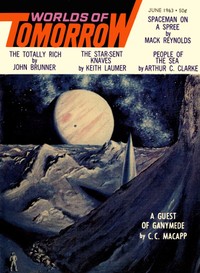
A Guest of Ganymede
Written by C. C. MacApp
Chaptra reads alongside you — AI insights, chapter breakdowns and reader discussions for every book. Join free
About this book
Reading guide
Themes, characters and key ideas in A Guest of Ganymede, written by Chaptra AI.
- about 8 hours
- intermediate
- mysterious
- tense
- dark
C. C. MacApp's early 1960s science fiction novel, "A Guest of Ganymede," plunges protagonist Gil Murdoch into a perilous journey to Jupiter's moon Ganymede alongside the blind billionaire Frederick Waverill. Their mission: to seek out enigmatic aliens possessing advanced medical knowledge and a life-extending virus. As Murdoch harbors ulterior motives to smuggle the virus for his own gain, the narrative unravels a complex web of greed, survival, and moral compromise. The story culminates in a dramatic confrontation after Waverill's sight is restored, leading to unexpected twists that challenge the definitions of victory and defeat, ultimately offering a haunting commentary on human ambition.
“"Immortality is not a gift, Murdoch. It is a burden, one few humans are equipped to bear without corruption."”
Key themes
- The Pursuit of Immortality
- This is the central driving force of the narrative, embodied by Gil Murdoch's desire to acquire the life-extending alien virus. The theme explores humanity's innate fear of death and the lengths to which individuals will go to defy mortality. It questions whether immortality is a blessing or a curse, and the ethical compromises one might make to achieve it.
- Greed and Ambition
- This theme explores the corrupting influence of unchecked desire and the relentless drive for personal gain. Murdoch's ambition to secure the alien virus for himself, even at the cost of betraying his benefactor, highlights how selfish desires can lead to moral degradation and dangerous actions. It examines the human tendency to prioritize personal power and longevity over ethical considerations and loyalty.
- Moral Ambiguity and Human Nature
- The novel deliberately blurs the lines between good and evil, protagonist and antagonist, especially through the complex character of Gil Murdoch and the 'unexpected twists' at the story's conclusion. It explores the inherent flaws and contradictions within human nature, questioning whether individuals are inherently good or bad, or if circumstances and desires simply reveal a spectrum of moral choices. The narrative challenges readers to consider the motivations behind seemingly villainous acts and the potential for even noble intentions to become corrupted.
Worth discussing
To what extent do Murdoch's actions define him as a villain or merely a deeply flawed human being?
Chapter-by-chapter breakdowns, character arcs and the full thematic analysis come with a free account.
Discussions
No one has started one yet
Questions this book opens up
No discussions yet
Be the first to start a discussion about this book!
Sign up to start the discussionReviews
No reviews yet
Be the first to review this book!