
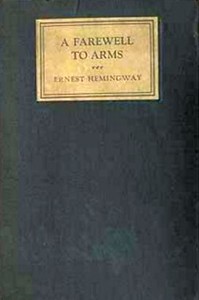
A farewell to arms
Written by Ernest Hemingway
Chaptra reads alongside you — AI insights, chapter breakdowns and reader discussions for every book. Join free
About this book
Read it with a club
Chaptra's history and war clubs — small groups reading the same books and talking as they go.


Footnotes & Firefights
History and war
- 4 members
- 4 discussions
- Active Sep 11
Military history, from grand strategy down to the deeply boring logistics that actually decided everything. This is a Chaptra house club — set up and moderated by us to get the conversation going. Open to everyone; jump in anywhere.
Read A farewell to arms alongside people who are reading it too.
Also here: Empire, Reconsidered
Chaptra Prime — paid clubs, every club feature, and unlimited reading support, for $5 a month or $60 once.
See PrimeReading guide
Themes, characters and key ideas in A farewell to arms, written by Chaptra AI.
- about 8 hours
- intermediate
- somber
- tragic
- realistic
Ernest Hemingway's "A Farewell to Arms" is a poignant and stark novel set during World War I, chronicling the experiences of Frederick Henry, an American ambulance driver serving in the Italian army. The narrative delves into his disillusionment with the brutal realities of war and his passionate, yet ultimately tragic, love affair with Catherine Barkley, an English nurse. As Frederick seeks to escape the futility of conflict through personal connection, the story explores profound themes of love, loss, stoicism, and the pervasive absurdity of war. The novel captures a desperate attempt to forge meaning and sanctuary in a world shattered by violence, culminating in an inescapable confrontation with fate and profound loneliness.
“I was always embarrassed by the words sacred, glorious, and sacrifice and the expression in vain.”
Key themes
- War and its Absurdity/Futility
- The novel vividly portrays the senselessness, brutality, and dehumanizing effects of World War I. It critiques the grand narratives of patriotism and heroism by focusing on the individual's experience of chaos, arbitrary death, and the breakdown of order. The disastrous Italian retreat from Caporetto is a prime example of this breakdown, highlighting the ultimate futility of the conflict.
- Love and Loss
- At its heart, the novel is a tragic love story. Frederick and Catherine's intense relationship is a desperate attempt to find meaning, solace, and a refuge from the war's horrors. Their love is passionate but also fraught with anxiety and dependency, ultimately proving fragile against the indifferent forces of fate and death.
- Disillusionment and Existentialism
- Frederick's journey is one from initial detachment to profound disillusionment with all grand systems – war, patriotism, religion – and a subsequent search for meaning in individual experience and love. The ultimate tragedy suggests an existential despair, where even intense personal connection cannot overcome the inherent meaninglessness or brutal randomness of life.
Worth discussing
How does Hemingway's 'iceberg theory' writing style contribute to the novel's themes and emotional impact?
Chapter-by-chapter breakdowns, character arcs and the full thematic analysis come with a free account.
Discussions
No one has started one yet
Questions this book opens up
No discussions yet
Be the first to start a discussion about this book!
Sign up to start the discussionReviews
No reviews yet
Be the first to review this book!