
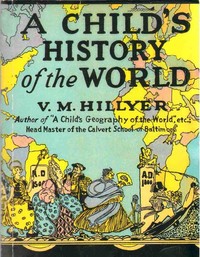
A Child's History of the World
Written by V. M. (Virgil Mores) Hillyer
Chaptra reads alongside you — AI insights, chapter breakdowns and reader discussions for every book. Join free
About this book
Reading guide
Themes, characters and key ideas in A Child's History of the World, written by Chaptra AI.
- about 8 hours
- beginner
- informative
- curious
- wondrous
A Child's History of the World by V. M. Hillyer is a foundational early 20th-century educational text designed to introduce young readers to the vast sweep of human history. Beginning with a whimsical, imaginative contemplation of Earth's origins and the emergence of life, the book systematically guides children through prehistoric times and major ancient civilizations. Hillyer employs a simplified, engaging, and conversational narrative style to break down complex historical concepts into accessible segments, fostering curiosity and wonder. It provides a crucial chronological framework for understanding the past, emphasizing key events, figures, and developments that shaped the world from emptiness to the dawn of complex human societies.
“Imagine a world, if you can, without a single person in it!”
Key themes
- The Wonder of Human History and Discovery
- This theme is central to Hillyer's approach, aiming to ignite a sense of awe and curiosity in young readers about the past. He frames history as a grand adventure of human ingenuity, struggle, and eventual triumph, from the first tools to complex civilizations. The narrative frequently invites the reader to imagine and marvel at the achievements and lives of people long ago.
- Accessibility and Simplification of Knowledge
- A core purpose of the book is to make the vast and often daunting subject of world history digestible and engaging for children. Hillyer consciously employs simple language, clear explanations, and relatable analogies to demystify complex historical concepts, ensuring that young readers can grasp foundational ideas without feeling overwhelmed. This theme reflects Hillyer's pedagogical philosophy.
- The March of Time and Human Progress
- The book systematically emphasizes the chronological progression of history, showcasing humanity's gradual development from primitive states to increasingly complex societies. It underscores the idea of 'progress,' illustrating how each era built upon the last, leading to advancements in technology, governance, and culture. While acknowledging setbacks, the overall tone is one of forward momentum.
Worth discussing
How does Hillyer make history feel like an exciting story rather than just a list of facts? What techniques does he use?
Chapter-by-chapter breakdowns, character arcs and the full thematic analysis come with a free account.
Discussions
No one has started one yet
Questions this book opens up
No discussions yet
Be the first to start a discussion about this book!
Sign up to start the discussionReviews
No reviews yet
Be the first to review this book!