
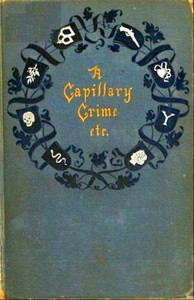
A Capillary Crime, and Other Stories
Written by Francis Davis Millet
Chaptra reads alongside you — AI insights, chapter breakdowns and reader discussions for every book. Join free
About this book
Reading guide
Themes, characters and key ideas in A Capillary Crime, and Other Stories, written by Chaptra AI.
- about 7 hours
- intermediate
- mysterious
- introspective
- somber
Francis Davis Millet's "A Capillary Crime, and Other Stories" is a late 19th-century collection of short fiction that delves into themes of intrigue, human emotion, and unforeseen circumstances. The titular story, "A Capillary Crime," sets a compelling tone, unfolding with the mysterious murder of artist Charles Mandel in his Montmartre studio. As police investigate amid a gathering crowd and the emergence of an anxious young woman, the narrative meticulously unravels layers of complex relationships and potential motivations, characteristic of the era's crime and psychological thrillers. The collection as a whole likely explores similar intricate plots and character studies, reflecting the social and psychological undercurrents of fin-de-siècle Europe.
“"The quiet street, usually a haven for artists and dreamers, now held the chilling silence of an unspoken tragedy."”
Key themes
- Mystery and Investigation
- Central to 'A Capillary Crime,' this theme explores the process of uncovering truth from concealment. It delves into the methodical nature of police work, the sifting of evidence, and the interpretation of human behavior to solve a perplexing crime. The narrative structure itself is built around the gradual revelation of clues and motives, engaging the reader in the investigative process.
- Human Nature and Deception
- This theme examines the complexities of human motivation, the secrets people keep, and the deceptive appearances they maintain. The 'complex relationships' hinted at suggest a narrative where characters might be hiding truths, driven by emotions like jealousy, ambition, or fear, leading to tragic outcomes or deliberate misdirection.
- Social Class and Urban Life
- Set in Montmartre, the story inherently explores the social fabric of late 19th-century Paris. It might touch upon the bohemian artist's life, the anonymous crowds of the city, and the potential for crime and intrigue to flourish amidst both poverty and affluence. The juxtaposition of a quiet street with bustling city life highlights the contrasts within urban environments.
Worth discussing
How does the setting of Montmartre contribute to the atmosphere and themes of 'A Capillary Crime'?
Chapter-by-chapter breakdowns, character arcs and the full thematic analysis come with a free account.
Discussions
No one has started one yet
Questions this book opens up
No discussions yet
Be the first to start a discussion about this book!
Sign up to start the discussionReviews
No reviews yet
Be the first to review this book!