
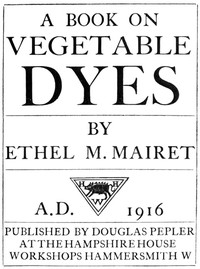
A Book on Vegetable Dyes
Written by Ethel Mairet
Chaptra reads alongside you — AI insights, chapter breakdowns and reader discussions for every book. Join free
About this book
Reading guide
Themes, characters and key ideas in A Book on Vegetable Dyes, written by Chaptra AI.
- about 12 hours
- intermediate
- Instructive
- Nostalgic
- Appreciative
Ethel Mairet's "A Book on Vegetable Dyes" serves as both a practical manual and a passionate plea for the revival of traditional dyeing techniques. Written in the early 20th century, the book laments the decline of natural dyes in the face of synthetic alternatives, advocating for a return to the nuanced beauty and craftsmanship inherent in vegetable dyeing. It meticulously outlines the historical context, essential materials, and detailed processes for extracting and applying natural colors to various fibers. More than just a how-to guide, Mairet's work emphasizes the artistic and cultural significance of this fading art, encouraging artisans to reconnect with nature and heritage through their craft.
“The beauty of colours obtainable through natural dyes has been overshadowed by the ease of chemical dyes.”
Key themes
- Preservation of Traditional Crafts
- Mairet's central argument is the critical need to preserve and revive the ancient art of vegetable dyeing. She sees this not just as a technical skill but as a cultural heritage, lamenting its decline due to industrialization and the rise of synthetic alternatives. The book is a direct effort to document and pass on this endangered knowledge.
- The Value of Natural Materials and Color
- Mairet passionately argues for the inherent superiority of natural colors derived from plants and insects. She describes their unique depth, subtlety, and living quality, contrasting them with the often harsh or superficial appearance of synthetic dyes. This theme underscores an appreciation for nature's palette and the wisdom embedded in natural processes.
- Artistry vs. Industrialization
- The book is a direct response to the industrial revolution's impact on textile production. Mairet critiques the shift towards mass-produced, chemically dyed goods, which she views as sacrificing artistry and quality for speed and cheapness. She champions the artisan who understands and controls the entire process, from raw material to finished product, as opposed to the factory worker performing a specialized, disconnected task.
Worth discussing
How does Mairet's lament for the loss of traditional dyeing methods resonate with contemporary concerns about industrialization, mass production, and the decline of artisanal skills?
Chapter-by-chapter breakdowns, character arcs and the full thematic analysis come with a free account.
Discussions
No one has started one yet
Questions this book opens up
No discussions yet
Be the first to start a discussion about this book!
Sign up to start the discussionReviews
No reviews yet
Be the first to review this book!