
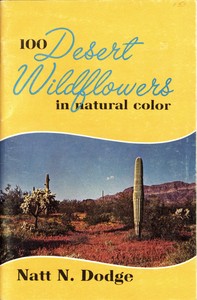
100 Desert Wildflowers in Natural Color
Written by Natt N. (Natt Noyes) Dodge
Chaptra reads alongside you — AI insights, chapter breakdowns and reader discussions for every book. Join free
About this book
Reading guide
Themes, characters and key ideas in 100 Desert Wildflowers in Natural Color, written by Chaptra AI.
- about 8 hours
- intermediate
- Informative
- Educational
- Appreciative
Natt N. Dodge's "100 Desert Wildflowers in Natural Color" is a foundational scientific publication from the early 1960s, serving as a comprehensive field guide to the diverse wildflower species of the Southwestern United States and Northern Mexico. It meticulously details the characteristics, ecological environments, and blooming patterns of 100 notable desert plants, challenging conventional perceptions of deserts as barren landscapes by highlighting their rich biodiversity. Beyond its utility as a visual reference, the book features practical advice for nature enthusiasts and photographers, including tips for capturing wildflowers, and explores the intricate relationship between rainfall, temperature, and the proliferation of desert flora. It stands as an essential resource for fostering appreciation and understanding of desert ecosystems.
“The desert, far from being barren, teems with a delicate and vibrant life, often hidden in plain sight.”
Key themes
- Biodiversity and Ecological Richness
- The book's central theme is to showcase the immense and often underestimated biodiversity of desert ecosystems. It challenges the common perception of deserts as barren, instead presenting them as vibrant habitats teeming with unique and resilient plant life. By focusing on 100 distinct species, Dodge systematically illustrates the variety of forms, colors, and adaptations that allow wildflowers to thrive in arid conditions.
- Ecological Interconnectedness and Adaptation
- The book delves into the complex relationships between desert flora and their environment. It explores how factors like rainfall, temperature, and soil composition dictate blooming patterns and species distribution, emphasizing the delicate balance required for survival. Each wildflower's description implicitly or explicitly details its adaptations to arid conditions, illustrating the ingenuity of nature.
- Nature Appreciation and Scientific Observation
- Beyond mere identification, the book fosters a deep appreciation for the beauty and wonder of the natural world, particularly desert flora. It encourages readers to engage with nature through careful observation, providing both scientific details and visual references to enhance this experience. The inclusion of photography tips suggests an active, appreciative engagement with the subject.
Worth discussing
How does Dodge's introduction challenge common misconceptions about desert ecosystems, and why is this important for conservation?
Chapter-by-chapter breakdowns, character arcs and the full thematic analysis come with a free account.
Discussions
No one has started one yet
Questions this book opens up
No discussions yet
Be the first to start a discussion about this book!
Sign up to start the discussionReviews
No reviews yet
Be the first to review this book!